English
 Deutsch
 Italiano
 Français
 Português
 ไทย
ไทย
 Tiếng Việt
 Polski
 Türkçe
 Nederlands
 Română
 한국어
한국어
 Svenska
 Español
For most traders, the problem isn’t where they enter a trade but where they exit. This applies equally to Stop Loss (SL) and Take Profit (TP). When emotions drive these decisions, the outcome is almost always the same: losses. Exiting too early and leaving profits behind, or holding a position too long as a winning trade turns into a losing one, both undermine results. Relying on rough estimates for trade exits destroys consistency. Without a structured risk management exit strategy, even a high-accuracy system can lose capital through poorly timed trade closures.
The solution is not intuition but data. A Stop Loss should reflect real market behavior rather than fear. A Take Profit should be set at a predetermined price derived from statistical analysis rather than hope. Whether you place a limit order or rely on automation, your exits should function automatically and enforce trading discipline even when emotions interfere.
This is exactly what this guide provides. Using the exclusive Exit Optimizer in Forex Tester Online, you will learn how backtesting 20 years of tick history can transform subjective exit decisions into mathematically validated levels. The platform closes trades automatically at levels proven to maximize returns across thousands of historical scenarios, replacing guesswork with a statistically supported edge.
SL and Take ProfitTP are no longer arbitrary numbers. They become precise, testable, and uniquely tailored to your strategy.
What is a Stop Loss order
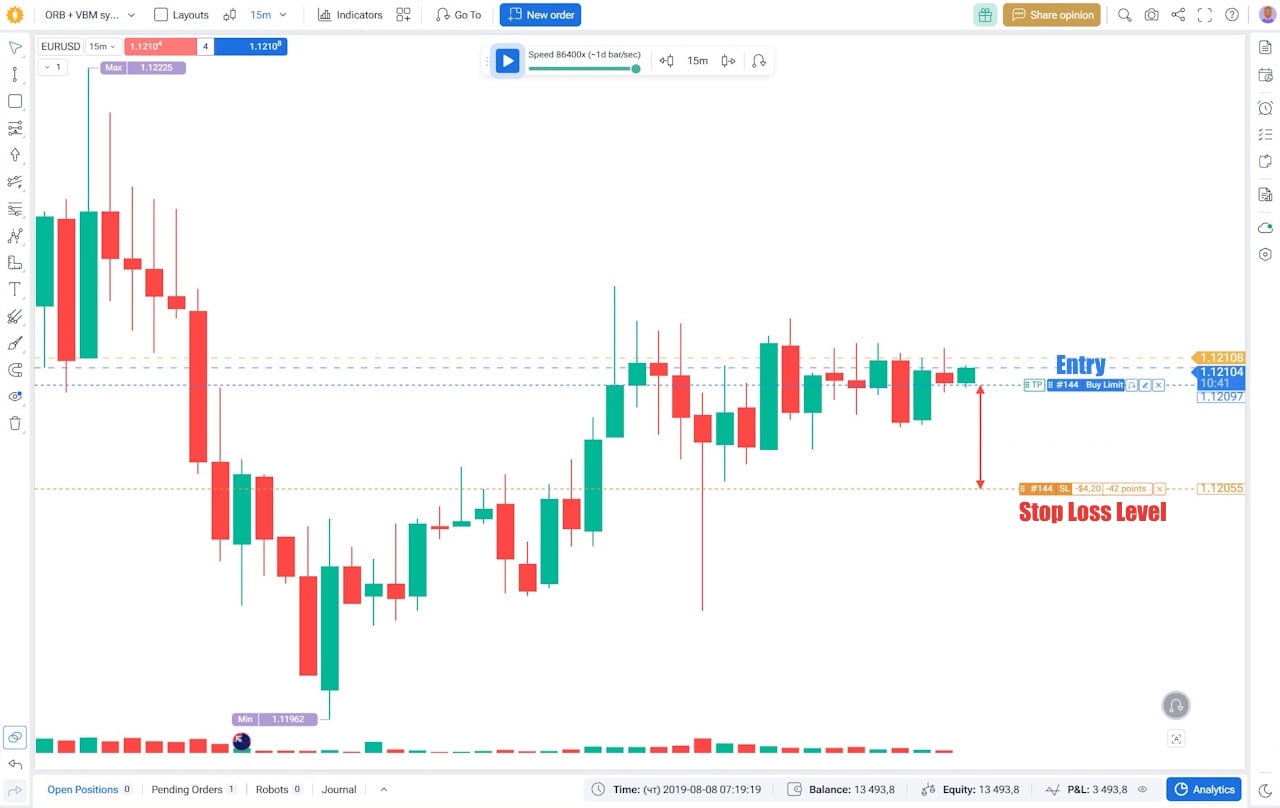
Where most traders go wrong, however, is not in understanding what a Stop Loss Level is but in actually using one. The so-called “mental stop” approach, in which a trader sets an internal price threshold and promises to exit if things go wrong, is one of the fastest routes to blowing up an account. In the heat of a losing trade, objectivity disappears and rationalization takes over: “It will bounce back.” “Just a few more pips.” A hard SL has no emotions, no hesitation, and no room for excuses. It executes exactly when it should, and that mechanical discipline is what separates traders who survive drawdowns from those who do not.
What is a Take Profit order?
A Take Profit is the other half of a complete exit strategy: a pre-set order that automatically closes your trade once the price reaches your target price point. The logic is straightforward: a SL Level defines how much you are willing to lose, while a TP Level defines how much profit you consider sufficient. Markets rarely move in one direction indefinitely. By locking in profits at a predetermined price, you ensure that a winning trade actually ends as a winner instead of remaining open long enough for the market to reverse and erase your gains.
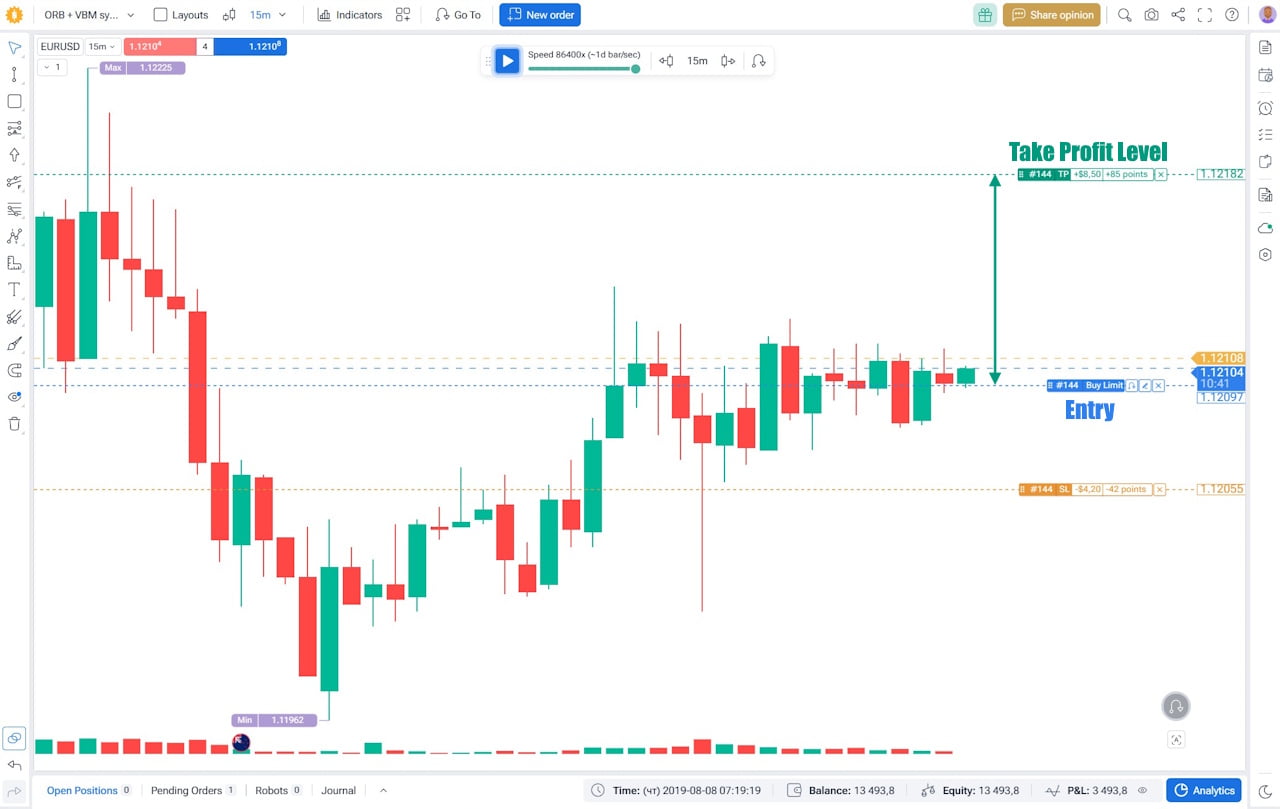
The challenge, however, is psychological. Once a trade moves in your favor, greed quietly enters the picture. A trader who has set a reasonable TP Level begins to think, “What if it keeps going? I will just move the target a little further.” Then the target moves again. This pattern of repeatedly shifting the TP in pursuit of larger gains often causes profitable trades to turn into breakeven results or even losses. Unlike the fear that disrupts Stop Loss discipline, it is optimism that undermines Take Profit execution. The solution is not willpower but removing the decision from human control: using simulation to set levels supported by real historical data, then allowing them to execute automatically without tampering.
The Pros and Cons of SL & TP: A Transparent Look
| Feature | Advantages (The "Why") | Disadvantages (The "Risks") |
|---|---|---|
| Stop Loss Level | Automatically caps losses, protecting your account from catastrophic drawdowns | Poorly placed SLs can be triggered by normal market noise before a trade has time to develop. |
| Removes emotion from losing trades | Market orders may experience slippage during periods of fast markets, resulting in execution at a worse price than intended. | |
| Enforces consistent risk management across every trade | Stop-limit orders offer no guarantee of execution in fast-moving markets. | |
| Allows you to step away from the screen without risking an uncontrolled loss | A fixed SL that fails to account for market volatility and entry patterns leads to inconsistent results. | |
| Defines your maximum risk per trade before you enter, supporting proper position sizing | Frequent SL hits caused by poorly researched placement erode both capital and trading confidence. | |
| Take Profit Level | Automatically locks in gains before the market has a chance to reverse. | A TP set too conservatively leaves significant profit on the table. |
| Eliminates greed-driven decision-making at the peak of a winning trade. | A TP set too aggressively results in trades that never reach the target, turning potential winners into losers. | |
| Provides a clear predetermined profit target, enabling you to establish a favorable Risk-Reward Ratio (1:2) before entering a trade. | Moving a TP on impulse during a trade undermines the entire exit strategy. | |
| Executes automatically, without requiring the trader to monitor the position in real time. | Without backtesting, any TP level remains an arbitrary guess rather than a statistically validated target. | |
| Creates repeatable and measurable outcomes that can be optimized over time. | A fixed TP Level may fail to account for changing market conditions or instrument-specific behavior. |
3 Advanced Placement Strategies: Where to Draw the Line
Beginner traders often place their SL and TP levels at round numbers that simply feel comfortable, relying on little more than instinct to justify the choice. Experienced traders do the opposite. They allow the market to dictate their exits, recognizing that every instrument has its own price behavior and price levels that consistently matter.
The three placement strategies below represent the most effective data-backed approaches to setting SL and TP. Each is designed to be tested and refined using Forex Tester Online, where you can use 20 years of tick history to turn theoretical methods into statistically validated tools tailored to your specific trading style.
The Volatility-Adjusted Stop (The ATR Method)
Not all markets move in the same way. The natural price behavior of EUR/GBP, the routine market noise that has nothing to do with whether your trade is right or wrong, is fundamentally different from the wild swings of Gold (XAU/USD). This distinction is exactly what the Forex Tester Online is built to quantify.
A 20-pip stop that gives EUR/GBP enough room to develop would be wiped out in minutes on Gold by nothing more than such noise. ATR-based placement addresses this directly by measuring the average true range, transforming price fluctuations from a threat into a quantifiable input. This removes the guesswork from determining how much room each instrument actually needs.
The ATR (Average True Range) solves this by measuring how much a given asset typically moves over a defined period. It captures the real rhythm of the market rather than relying on an arbitrary number that simply feels right. Instead of asking, “What stop size am I comfortable with?”, the ATR method asks, “What stop size does this market statistically require?” This provides a far more objective starting point.
The formula is straightforward to apply:
- Stop Loss: Entry − (2 × ATR)
- Take Profit: Entry + (4 × ATR) (for a Risk-Reward Ratio (1:2)).
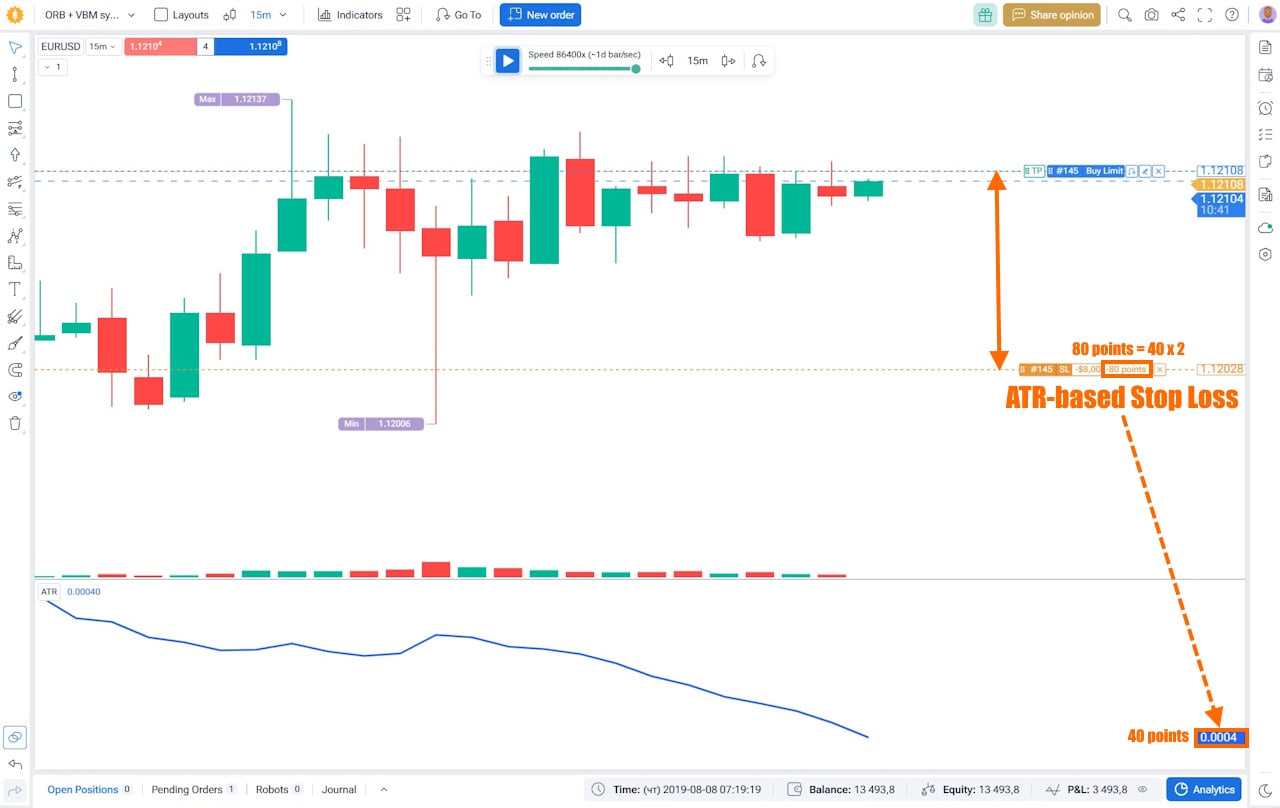
The Exit Pair – by anchoring both your SL and TP to actual market behavior – immediately eliminates one of the most common causes of premature stop-outs: placing stops too tight on a volatile instrument. That said, the multipliers above are only a starting point, not a universal rule. The optimal multiplier for your specific instrument, timeframe, and entry pattern can only be confirmed by historical data. This is exactly where backtesting in Forex Tester Online turns a solid methodology into a personalized, statistically validated edge.
FTO Tip:
Replay major news events in Forex Tester Online to see whether your ATR-based stop gets clipped by routine market noise – or actually survives long enough to let your trade idea play out. 📊🎯
Market Structure & “Liquidity Voids”
There is a reason your stop seems to get triggered almost supernaturally right before the market reverses in your favor. It is not bad luck. Placing a Stop Loss Level directly at an obvious Support and Resistance level puts you in the crosshairs of stop hunting. This is the tendency of price to briefly spike through well known levels, trigger the stops clustered there, and then continue in the original direction.
The Forex Tester Online is built to help you quantify exactly how far beyond the nearest Swing High or Swing Low your stop needs to sit. This ensures your SL is positioned where the market has to work to reach it, not where every other retail trader has placed theirs.
The practical fix is simple but deliberate. Locate the most recent Swing High or Swing Low that is relevant to your trade, then place your Stop Loss 3 to 5 pips beyond it rather than directly on it. The reasoning is straightforward. If price genuinely breaks through a structural low, your original trade thesis no longer holds. At that point, you are not being stopped out by noise. You are being stopped out because the market has structurally proven you wrong – which is exactly when you want to exit.
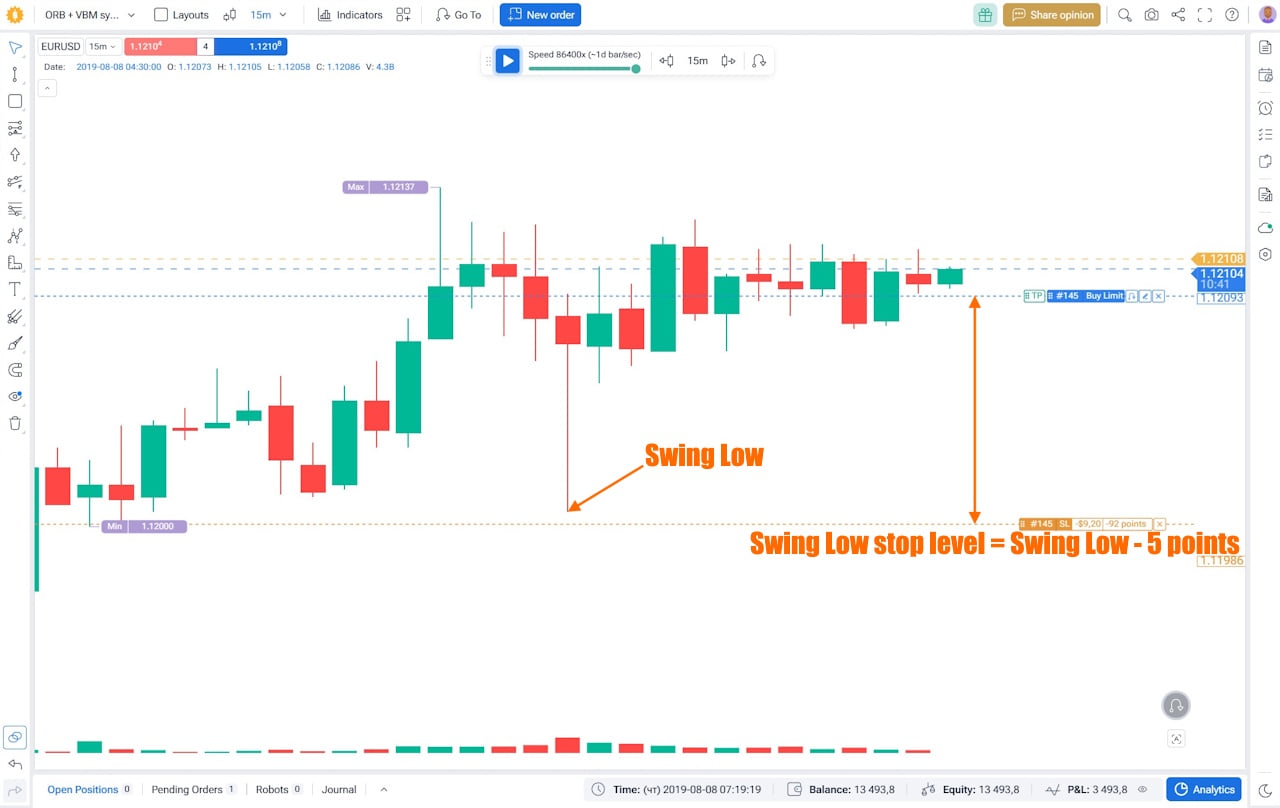
For TP Level placement, the same structural logic applies in reverse. Instead of targeting a fixed pip count, aim for the next liquidity void or unfilled gap on a higher timeframe. These Support and Resistance areas are where price has historically moved quickly with minimal opposition, making them natural destinations for the next directional move. Such zones provide a far more market-grounded TP target than any arbitrary number, and their reliability across different instruments and market conditions is something that only historical backtesting can properly verify.
The Fibonacci Extension Target
One of the most frustrating experiences in trading is closing a position too early, only to watch the market continue moving in your direction for another hundred pips. Leaving money on the table is a problem that affects traders at every experience stage. Fibonacci extensions offer a mathematically grounded alternative to guessing where a move might exhaust itself, and the Forex Tester Online allows you to verify how reliably these levels have acted as turning points across years of historical data for your specific instrument.
The approach begins by drawing a Fibonacci retracement across the most recent significant price move, from its origin to its peak, or vice versa depending on the direction. Rather than using the retracement markers to time an entry, the goal here is to look beyond the current price action and project forward to the 127.2% and 161.8% extension targets. These become your Take Profit targets, not because of any mystical property of the numbers, but because they represent price zones where a statistically significant number of trend-following traders have historically closed their positions. That collective behavior creates real, measurable selling or buying pressure at these levels – which is precisely why they so often precede reversals.
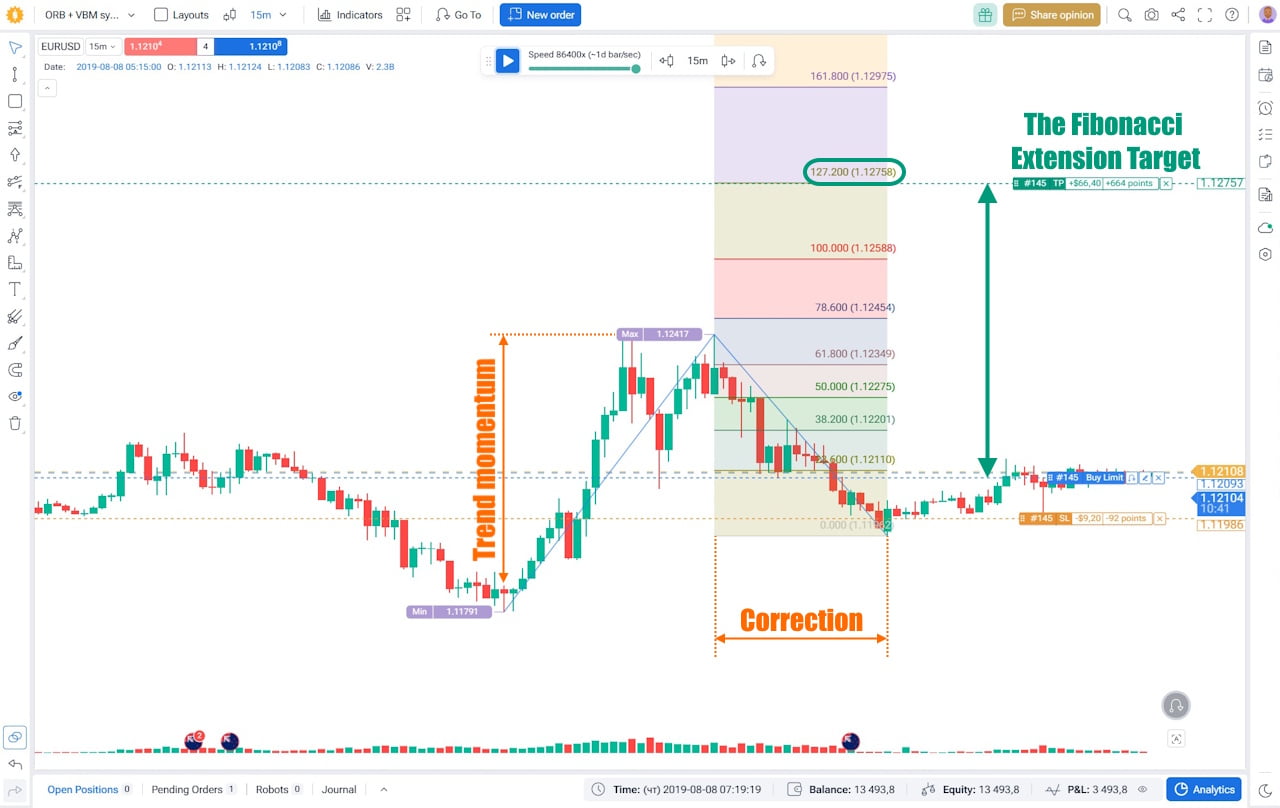
The practical value of this approach lies not only in knowing that these levels exist, but in understanding whether they actually hold on the instruments you trade and across the timeframes you use. A Fibonacci extension that consistently produces reversals on EUR/USD at the daily timeframe may behave very differently on Gold on the one-hour chart. That distinction can only be settled with data, not theory. This is exactly what separates traders who use Fibonacci as a genuine edge from those who simply draw lines and hope for the best.
The “Backtest or Bust” Phase – Where Forex Tester Online Should be Used
Manual backtesting has a fundamental flaw that most traders never fully account for: hindsight bias. When you scroll back through historical charts and ask yourself where you would have placed your SL and TP Levels, your brain already knows what happened next. That knowledge quietly shapes every decision you believe you are making objectively, producing results that feel convincing but would rarely survive real market conditions. In effect, you are not testing your strategy. You are retrofitting it to history you have already seen. This is why so many backtested systems collapse the moment they meet a live market.
Forex Tester Online eliminates this problem in every aspect. The Forward-only mode reveals price action one candle at a time, exactly as it would unfold in live trading. This forces you to place your SL and TP levels without any knowledge of what comes next – which is the only way a backtest can produce meaningful results.
Beyond that, FTO operates on tick-by-tick data rather than the interpolated data commonly used by platforms such as MetaTrader. This is a critical distinction because interpolated data smooths over the intrabar price spikes that would have triggered your stop in real conditions, giving a falsely optimistic picture of a strategy’s performance. With tick-level data, every wick, every spike, and every stop hunt that actually occurred in the market is captured and tested against your levels.
Finally, FTO’s Project Sharing feature allows you to export your backtesting sessions and compare your exit decisions directly with mentors or peers. What is usually a solitary process becomes a collaborative one, where the gap between where you placed your exits and where an experienced trader would have placed theirs becomes immediately visible and actionable.
Feature Deep-Dive: The FTO Exit Optimizer
The Exit Optimizer is a specialized analytical tool built directly into Forex Tester Online. It offers something no other backtesting platform currently does. Instead of relying on generic risk-reward ratios taken from trading books (such as the classic Risk-Reward Ratio (1:2)), it analyzes your actual backtesting history and identifies the exit levels that would have produced the best results for your specific strategy, on your specific instrument, across years of real tick data. The outcome is not a theoretical recommendation. It is a data-driven answer to the question every trader eventually asks: “Where should I actually be getting out?”
Here is how the three-step process works.
Step 1: Backtest with Consistency
Before you can optimize your exits, you need a clean, accurate record of your entries.
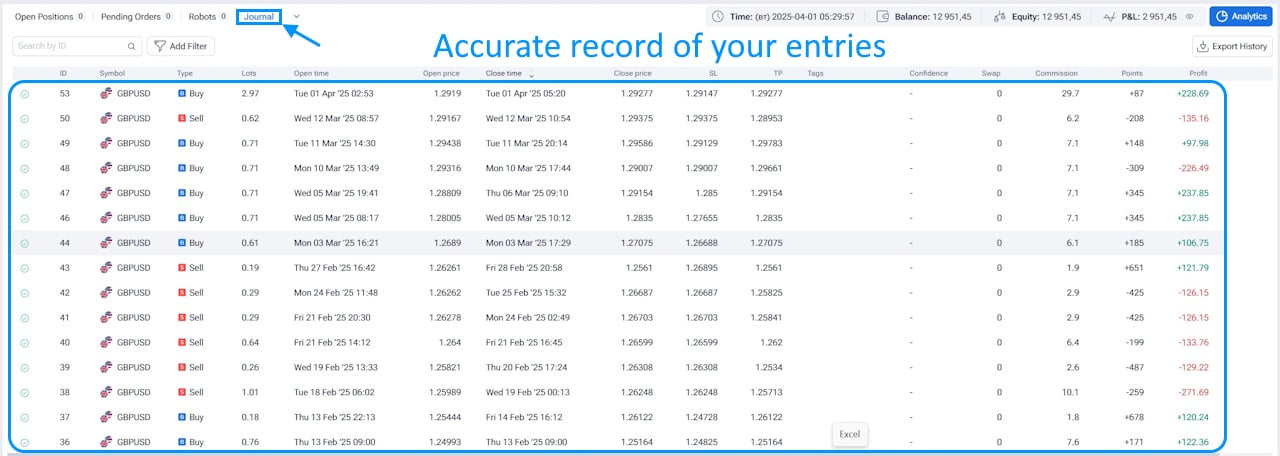
✅Let your strategy breathe. During the backtest, do not manually override your stop loss or take profit. Let every trade run according to the logic you are testing. This provides the optimizer with a clean dataset based solely on your entry decisions.
✅Let the step match your style. The optimization step – the granularity with which the tool adjusts SL/TP levels – should reflect your trading horizon.
- Scalping: use a very small step (a few pips) with a short, time-based exit window
- Swing trading: use a wider step and a longer holding period.
✅Gather sufficient data. Although the tool works with as few as one trade, statistically meaningful results require more. Aim for at least 30 trades per instrument. The more consistent your entries, the more reliable the guidance becomes.
Step 2: Analyze with “What If” Scenarios
Once your backtest is complete, the Exit Optimizer examines every trade using a systematic “what if” approach. As a result, FTO provides the trader with recommendations for improving their trading strategy. For each item in the “Points to improve” list, it shows how their results would have changed had they followed it.
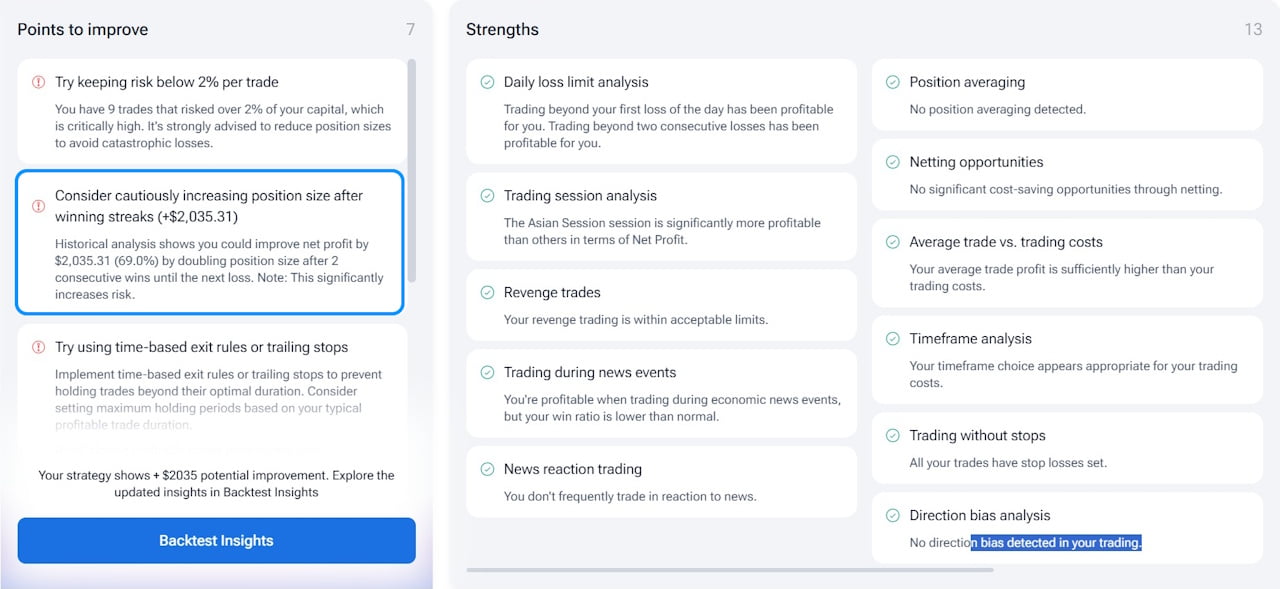
✅Thousands of variations. The tool asks: What if the stop loss had been 5 pips tighter? What if the take profit had been 10 pips farther? It tests every combination against the actual tick‑by‑tick price movement that occurred after your entry – not against theoretical models.
✅Two core metrics guide the analysis:
- Maximum Favorable Excursion (MFE) shows how far a trade moved in your favor before it closed. This reveals the profit potential you might be leaving on the table.
- Maximum Adverse Excursion (MAE) measures the largest move against you. This tells you whether your stops are consistently too tight (getting whipsawed by normal volatility) or too wide (absorbing unnecessary risk).
✅See what happens after you exit. The optimizer also tracks price movement after the original exit, giving you an objective view of whether you closed too early or too late – a critical insight missing from standard backtesters.
Step 3: Optimize for Your “Plateau”
The tool generates an interactive report that turns raw data into actionable parameters.
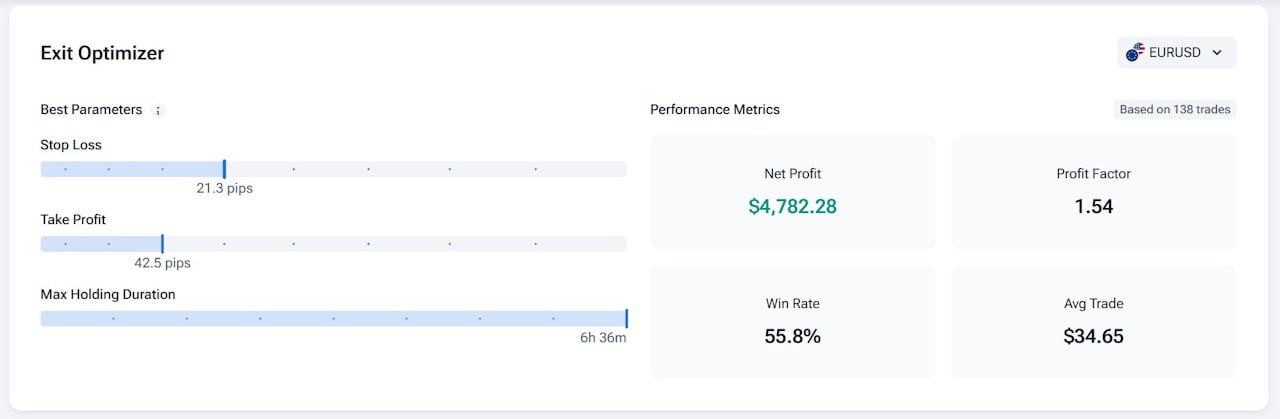
✅Find the stable range. Adjust the sliders for stop loss, take profit, and max holding duration. Tick marks on the sliders show the values that produced the highest net profit. Instead of picking the single best (curve‑fitted) number, look for the plateau–a range where performance remains consistently high. That range is more robust and more likely to hold up in future market conditions.
✅Apply the guidance. The report gives you a clear set of parameters. For example, it might recommend a 21.30‑pip stop loss and a 42.50‑pip take profit.
Important:
The Exit Optimizer displays values in pips. Your order window uses points. Simply multiply the pip value by 10 (e.g., 21.30 pips = enter 213 points).
✅Optimize per instrument. Volatility differs across assets. Run the optimization separately for each instrument you trade.
✅Reoptimize regularly. Market dynamics change. For the most accurate guidance, rerun the optimizer every 1–3 months using the most recent 6 to 12 months of your trading data.
By following this process, you replace subjective guesswork with a systematic, data‑backed approach to trade management. You stop asking “Where should I exit?” and start knowing: “This is the optimal range for my strategy, on this instrument, right now.”
The results are often surprising. A common breakthrough moment during backtesting is discovering that a 1:1.8 risk to reward ratio consistently outperforms the textbook Risk-Reward Ratio (1:2), not in theory but across hundreds of real EUR/USD trades. That gap may seem small on paper, yet over time it can translate into roughly 20 percent more profit. It is the kind of insight that intuition or manual chart analysis rarely reveals – and exactly the type of edge that separates traders who optimize their exits from those who are still guessing.
Beyond “Set and Forget”: Dynamic Exit Strategies
Static Stop Loss and Take Profit levels provide a solid foundation, but the most consistently profitable traders go a step further by making their exits dynamic. The question of when to begin trailing your stop, especially around critical Support and Resistance zones, should not be answered by intuition. It should be answered with data.
The Forex Tester Online analyzes historical price behavior to determine how much breathing room a trade typically needs at each stage of its development. This helps reveal the precise point at which tightening your stop changes from being premature to being prudent.
The result is a Trailing Stop and break-even strategy that is not borrowed from someone else’s rulebook, but built directly from the behavior of the markets you actually trade.
Case Study: Conventional Advice vs. Empirical Evidence
| Strategy Component | Standard "Broker Guide" Advice | FTO Result |
|---|---|---|
| SL Placement | Place your stop 20 to 50 pips below the entry as a general rule of thumb. | Alternatively, set it 1.7 × ATR (Average True Range) beyond the nearest Swing Low, a level validated by five years of historical volatility data. |
| TP Target | Aim for a Risk-Reward Ratio (1:2) as standard practice. | A 1:1.6 reward-to-risk ratio has been identified as the statistically optimal level for this specific instrument and setup. |
| Emotional Stress | Discretionary monitoring is required, with the trader deciding when to exit manually. | Exits are executed automatically at data-backed levels, removing in-trade decision making entirely. |
| Profitability | A theoretical edge based on generic market assumptions. | MFE Analysis reveals a 20% increase in net profitability measured across 20 years of tick-accurate historical data. |
Avoiding the “Psychological Trap”
Even the best designed exit levels become worthless the moment a trader starts interfering with them. The trailing stop dilemma – knowing when to lock in profit and when to give a trade more room – is one of the most psychologically demanding decisions in trading, and it almost always becomes worse under pressure.
A losing trade triggers the urge to move a Stop Loss Level slightly further away, buying time for a recovery that statistically rarely comes. A winning trade triggers the fear of giving back gains, prompting an early exit that leaves most of the move uncaptured. Both impulses feel completely rational in the moment, and both represent a form of revenge trading against your own strategy. It is one of the fastest ways to end up with an account that declines slowly but consistently.
The antidote is not discipline in the abstract. It is exposure. Forex Tester Online allows you to replay some of the most demanding market events ever recorded – events that test your psychological endurance, including NFP releases, FOMC announcements, and flash crashes – in a consequence-free environment where the only skill being trained is your ability to leave your stops untouched.
Repeat that experience across enough historical scenarios and the emotional muscle memory required to trust your Support and Resistance levels begins to develop. Over time, adhering to these levels stops being a conscious effort and instead becomes your default behavior.
Tip: Asset-Specific Nuances
Exit strategy is never truly universal. The optimal SL and TP logic for a EUR/USD trade looks fundamentally different from what works on Bitcoin or a mid-cap stock – and treating them the same is a mistake that shows directly in your results.
In forex trading, the primary variables are pip-based price fluctuations and the predictable turbulence surrounding high-impact news events, where spreads widen and stops are swept, behavior that calmer sessions rarely produce.
Crypto markets operate under a different set of conditions. Percentage-based moves replace pip counts, and the absence of market hours creates continuous trading with occasional liquidity gaps. These gaps can cause sudden price jumps through levels where no orders exist, triggering or completely skipping exit levels without warning.
Stocks introduce their own layer of complexity through overnight gapping. Price can open significantly above or below your Stop Loss Level after hours of market closure, making the choice between a Stop Limit and a Stop Market order a genuinely important decision rather than a minor technical detail.
Each of these asset classes has its own behavioral fingerprint. The only reliable way to build exit strategies that account for these nuances, rather than borrowing rules designed for a different market entirely, is to backtest them separately on real historical data. Using a platform such as Forex Tester Online – which offers the depth and tick-level accuracy required to capture these edge cases – allows traders to see how their exit logic performs under the exact conditions they will face in live markets.
Understanding the mechanics of Stop Loss Level and TP Level placement is a necessary starting point, but theoretical knowledge alone has never made a trader consistently profitable. The distance between understanding a 1:2 risk-to-reward ratio and proving it works for your strategy, on your instruments, across thousands of real conditions – that gapping is what separates survivors from thrivers. And it is closed with data, not conviction.
Every method covered in this guide, from ATR-based placement and market structure levels to Fibonacci extensions and dynamic trailing logic, is only as powerful as the historical evidence behind it. Without that evidence, even the most sophisticated exit framework remains, at its core, an educated guess. With it, your Stop Loss and Take Profit levels stop being sources of anxiety and become mechanical, repeatable components of a strategy that you have actually proven works.
The next step is not reading more. It is testing more. The Exit Optimizer in Forex Tester Online gives you the tools to audit your entire trading history via Simulation, identify the exit levels your strategy has truly been calling for through MAE Analysis, and measure exactly how much performance you may have been leaving on the table by relying on generic rules instead of your own data.
Ready to find your strategy’s optimal exit? Run your last 50 trades through the Forex Tester Online and let the numbers reveal what intuition never could.
Disclaimer
Trading involves risk. The indicators in this article are for educational purposes only and are not financial advice. Past performance does not guarantee future results. Always test strategies before using real money.
FAQ
Where is the best place to set a Stop Loss?
The ideal Stop Loss Level is not a fixed pip value, but the price level that invalidates your trade thesis. Professionals place it beyond a recent Swing Low or High, or use ATR (Average True Range) to account for volatility. The Forex Tester Online analyzes historical data to find the optimal placement for your specific strategy.
Should I always use a 1:2 Risk-Reward Ratio?
A 1:2 ratio is a reasonable starting point, but it’s not a universal rule. Depending on your strategy’s win rate and the instruments you trade, a 1:1.5 or 1:3 ratio may perform better. Forex Tester Online identifies which ratio yields the highest Profit Factor for your strategy – based on real historical data.
What is the difference between a Stop Loss and a Stop-Limit order?
When price reaches your Stop Loss, it triggers a market order that closes your position at the best available price, although slippage is possible in volatile conditions. A stop-limit order works differently. It executes only at your specified price or better, but there is no guarantee it will be filled.
Pro Tip:
During periods of extreme market turbulence, such as major news releases or sharp crypto market declines, a standard Stop Loss Level is simply the more reliable option. Waiting for a specific exit price in a fast-moving market can leave you stuck in a worsening position far longer than a straightforward market execution would have.🎯
Can I move my Stop Loss once the trade is open?
Never widen a Stop Loss on a losing trade. This single habit destroys more accounts than almost anything else. However, trailing your stop into profit or moving it to break even once you hit a target is a legitimate professional technique. Forex Tester Online lets you simulate different trailing distances to find what protects capital without cutting winning trades short.
Do I need a Stop Loss if I am day trading and watching the screen?
Mental stops fail for two reasons: human emotion and technical vulnerability. In the heat of a losing trade, objectivity disappears – and even if it didn’t, a news spike or internet glitch can send a position into freefall before you can react. A server-side hard Stop Loss eliminates both risks entirely.

Forex Tester Online
Find best SL & TP for your trading strategy!