English
 Deutsch
 Italiano
 Français
 Português
 ไทย
 Tiếng Việt
 Polski
 Türkçe
 Nederlands
 Română
 한국어
 Svenska
 Español
FTO has you covered when the market clock and your local clock change on different dates.
Your setup says: trade the first 30 minutes after the New York cash open. When daylight saving time changes, should you move the trading window? Yes, if your local clock and New York change on different dates. Keep the rule anchored to the market event, then convert that event into your local time for each trading day.
Follow the market clock
The US stock cash session opens at 09:30 New York time. That is 13:30 UTC while New York observes daylight saving time and 14:30 UTC during US standard time. The market event stays at 09:30 New York time; its time on your clock may move. Forex has no single opening bell, so define the specific session start your strategy uses.
Europe is a useful example. It changes clocks on 25 October 2026, while the US waits until 1 November. During the trading week between those dates, the 09:30 New York cash open is an hour earlier on European clocks. The gap returns from 15 to 26 March 2027, after the US changes on 14 March and before Europe changes on 28 March. Traders elsewhere face the same question whenever their local clock follows a different calendar.
Decide what your rule actually means
“Trade 09:30–10:00 New York time” follows the US cash open. “Trade at 15:30 because I am free then” follows your local schedule. Both are valid ideas, but they are different tests during a clock-change gap. Write the event and its reference time zone into the rule.
Backtest the same event in FTO
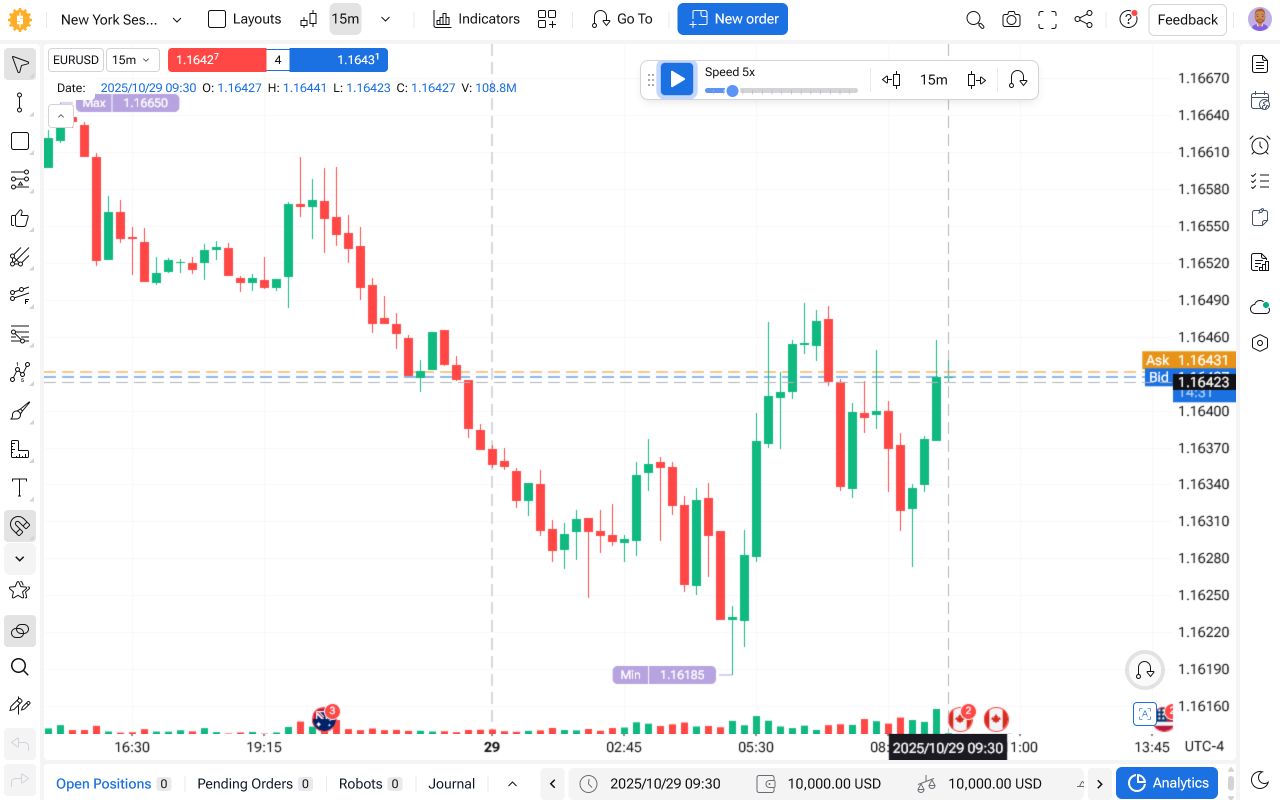
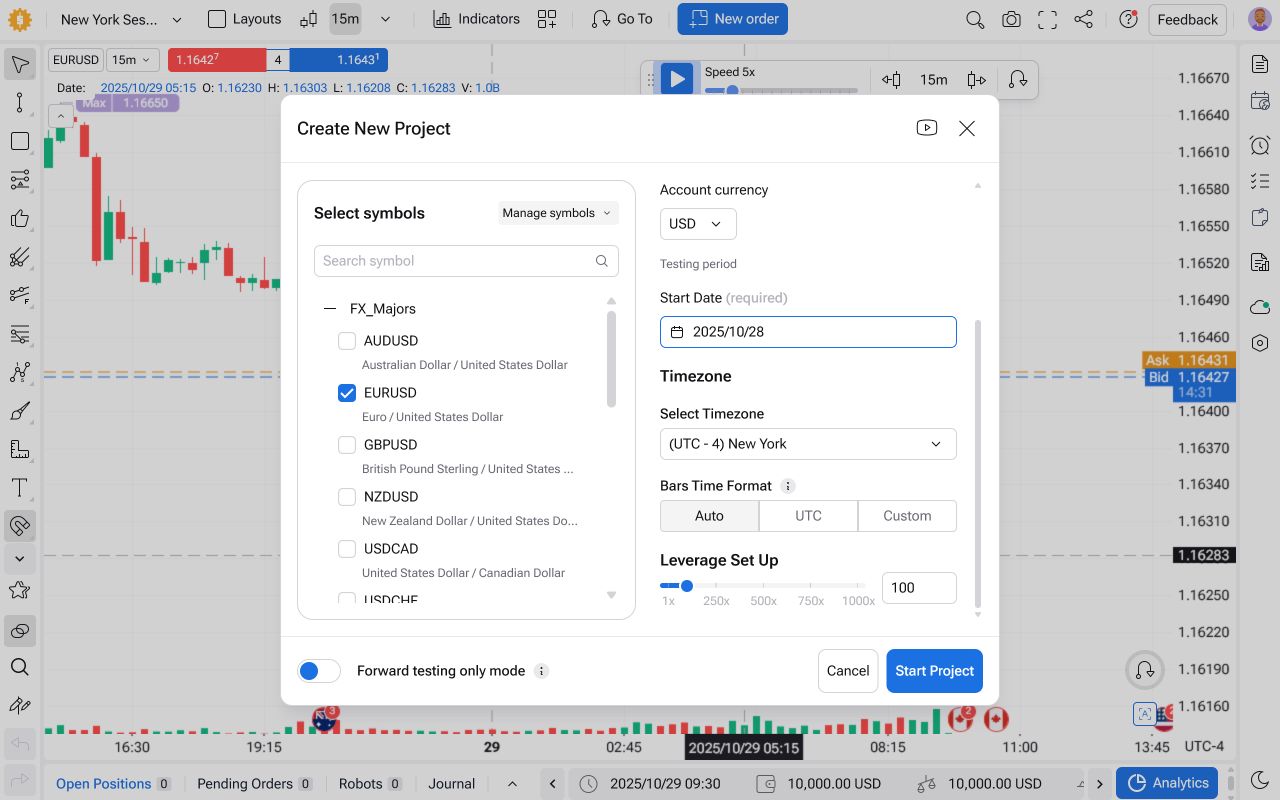
For a New York-based rule, select New York in the FTO project’s Timezone setting. The chart shows UTC−4 during US daylight saving time and UTC−5 after the fall clock change. Then define the trading window, entry, stop, exit and risk rules once, and keep them consistent through the sample.
A quick historical exercise: use Go To to replay 29 October and 3 November 2025. The 09:30 New York cash open was 13:30 UTC on the first date and 14:30 UTC on the second. Trade the same setup around that event on both days, then continue through a larger sample. Record the date, setup and result in the journal; label the transition period in your notes when comparing trades.
What the shift looks like in FTO
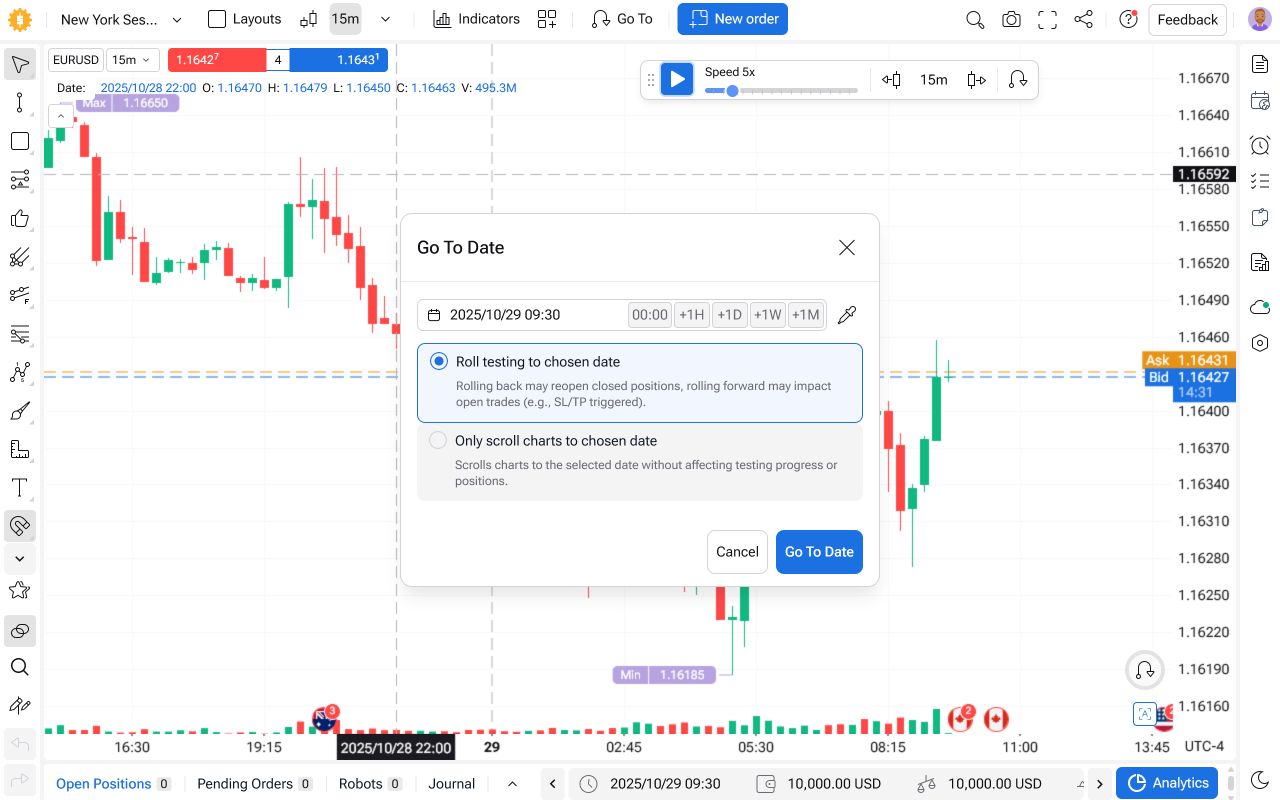

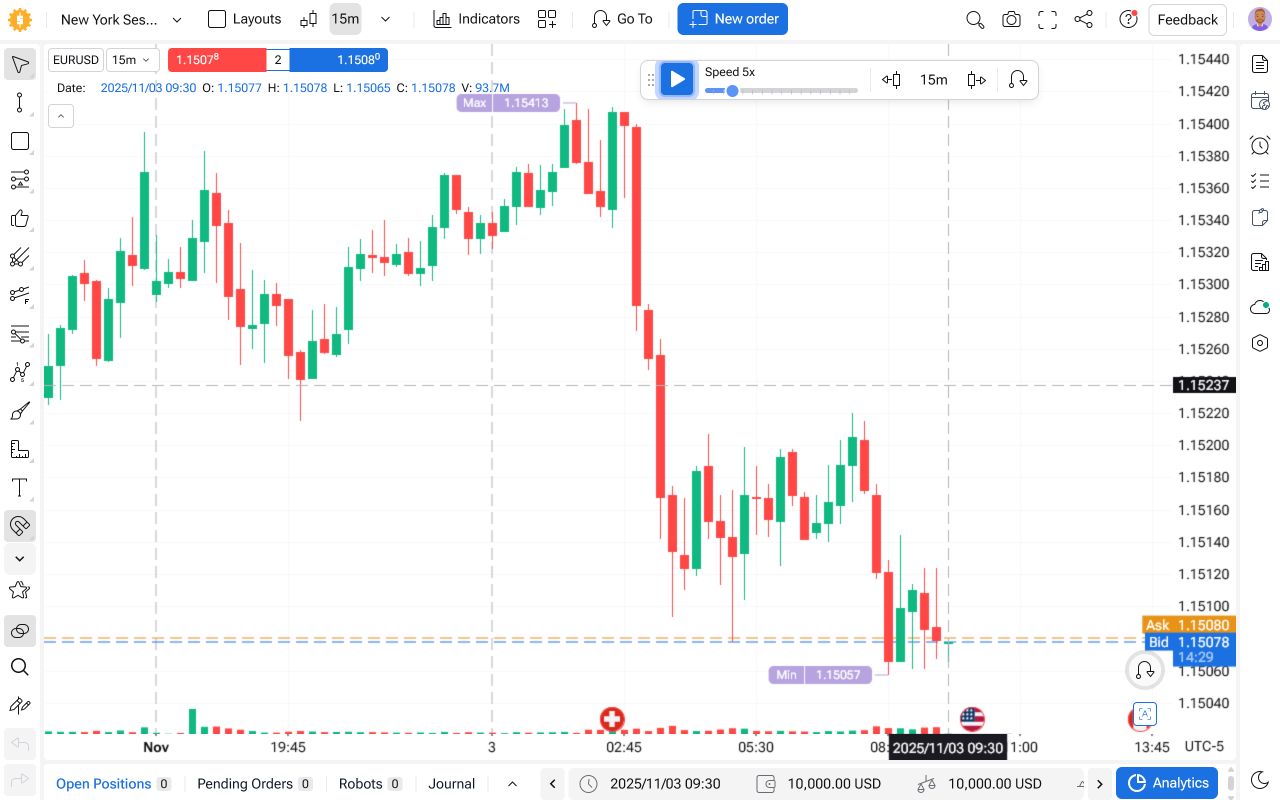
If your real constraint is a fixed hour on your own clock, backtest that window separately. Your available time is part of the strategy, and it deserves its own results.
Conclusion
Your backtest should follow the same clock as your trading rule. If the rule is tied to the New York cash open, set the FTO project to New York and test the same 09:30 event on both sides of the DST change. If the rule is tied to the hours you can trade, set the project to your local time zone and test that fixed window instead. The same approach works for any other time zone your setup follows.
Open Forex Tester Online, choose the time zone that defines your rule, and use Go To Date to replay it before and after the clock change. Keep entry, exit and risk rules consistent, then expand the sample before judging the edge.

Forex Tester Online
Accurate backtesting across DST changes